If you’ve searched how to rank on ChatGPT in 2026, you already know Google isn’t the only game. A growing share of high-intent questions get answered inside ChatGPT, Claude, Perplexity, and Google’s AI Overview — without users ever clicking through. LLM SEO (sometimes called Generative Engine Optimization or Answer Engine Optimization) is how you stop being invisible in those answers. We build Ranket, one of the tools in this category, so this guide includes both what we’ve shipped and what’s still genuinely unsolved.
TL;DR: Five structural signals drive whether an LLM cites you: JSON-LD schema, entity clarity, direct-answer paragraphs, citation-friendly sourcing, and training-data prominence. Skip directly to the 5 signals, the 30-day playbook, or the FAQ.
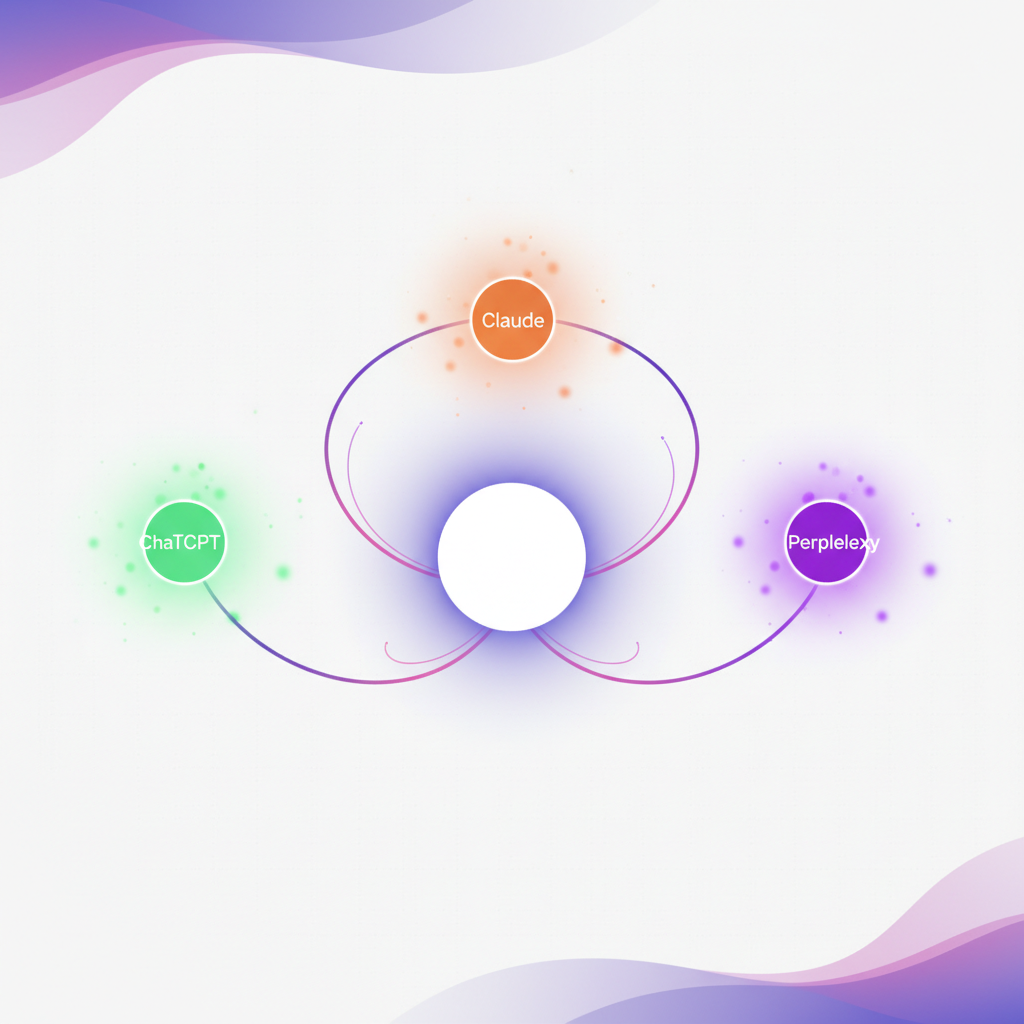
Why LLM ranking is different from Google ranking
Google’s ranking algorithm crawls, indexes, and scores pages against a query — the output is a ranked list of links. LLMs do something different: they retrieve content from training data (or live web search) and synthesize an answer that may or may not cite specific sources. The user gets the answer, not the link.
This shift breaks the traditional SEO model in three ways:
- Click-through rate stops mattering for cited-but-not-clicked queries. Your brand appears in the answer; the user never visits your site.
- Citation count is the new ranking position. Being cited 3x in a 10-question conversation is the new “page-1 ranking.”
- Authority and structure beat keyword density. LLMs cite content that’s unambiguous, sourced, and structurally clear — not content stuffed with the target keyword.
The category of work has acquired three names — LLM SEO, Generative Engine Optimization (GEO), and Answer Engine Optimization (AEO). They overlap heavily. GEO is the academic term from a 2023 research paper. AEO is the marketing term for optimizing for Google’s AI Overview and Perplexity. LLM SEO is the day-to-day work of writing content that scores well in both Google and LLM answers. For practical purposes they mean the same thing.
The 5 signals LLMs use to pick what to cite
Five structural features matter more than keyword targeting for LLM citation. None of them are new SEO concepts — they’re SEO concepts that suddenly matter much more.
- JSON-LD schema — the machine-readable description of your content
- Entity clarity — disambiguation of brand names, products, key concepts
- Direct-answer paragraphs — 40–60 word answers immediately under each H2
- Citation-friendly sourcing — inline links to primary sources
- Training-data prominence — references from Wikipedia, established publications, active subreddits
Each of these is a control point you can act on. We’ll walk through each below. For a real-time pulse on what other practitioners are seeing work, the r/AskMarketing thread What’s actually working to get brands cited by LLMs? is the most useful weekly read.
Signal 1: JSON-LD schema (the table-stakes signal)
Schema markup is the single biggest controllable signal for LLM citation in 2026. Without it, LLMs have to infer what your content is about from prose. With it, they read it directly.
The four schema types that matter for LLM citation:
- Article — every blog post should have it. Includes headline, description, author, datePublished, mainEntityOfPage.
- FAQPage — for any post with a Q&A section. Each question + answer becomes an individual unit LLMs can lift verbatim. Highest citation-impact schema type.
- HowTo — for tutorials and step-by-step guides. Steps become discrete LLM-citable units.
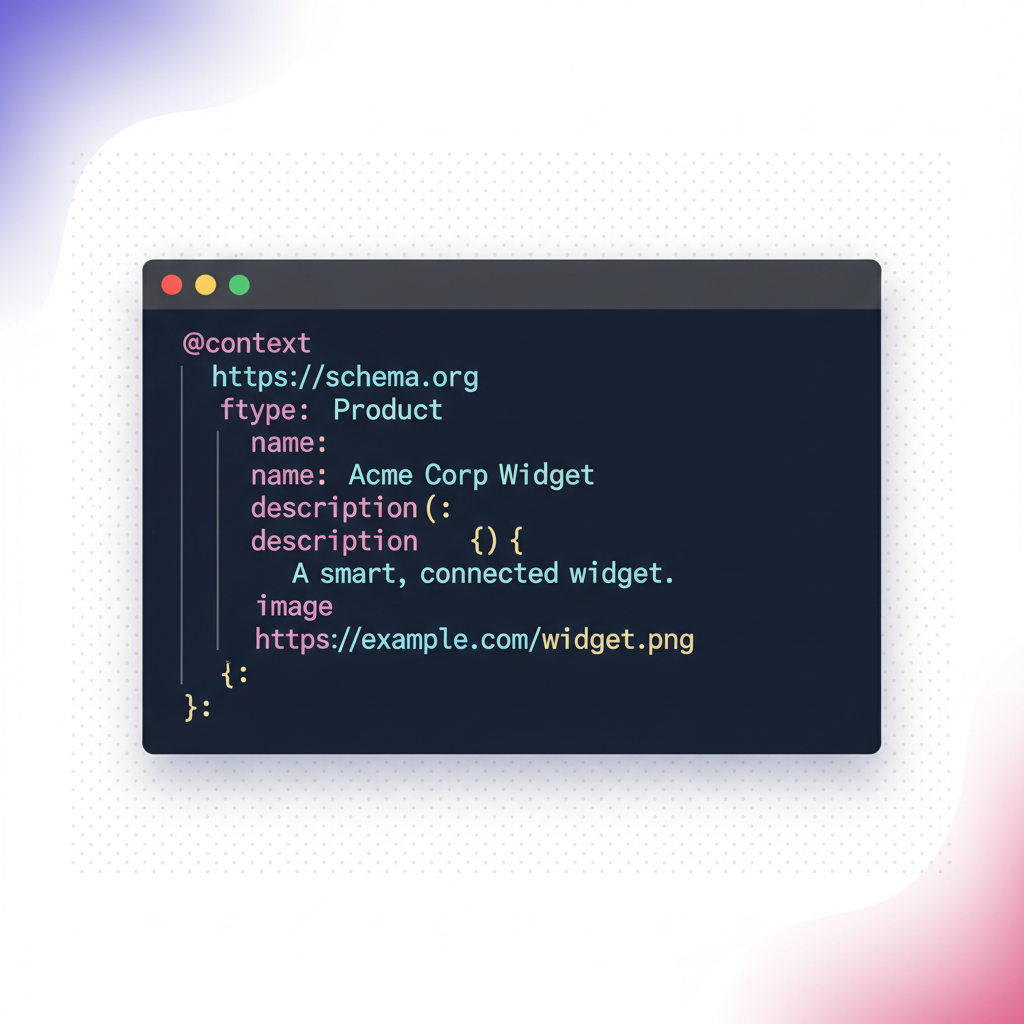
- Product — for any page describing a product, including comparison and pricing pages.
Example FAQPage block:
{
  "@context": "https://schema.org",
  "@type": "FAQPage",
  "mainEntity": [{
    "@type": "Question",
    "name": "How long until LLMs cite my content?",
    "acceptedAnswer": {
      "@type": "Answer",
      "text": "LLMs refresh their indices every few weeks. Articles with strong schema typically start appearing as citations within 4–8 weeks of publication."
    }
  }]
}
The mistake most teams make: adding schema as a one-time activity, then forgetting. Schema needs to be on every article you publish, not just the SEO-conscious ones. Ranket emits schema on every article by default; the manual alternative is a WordPress plugin like Rank Math (works, but adds friction) or a custom Astro component (best, but requires engineering).
Signal 2: Entity clarity (disambiguation)
LLMs need to know who and what your content is about. “Tesla” alone is ambiguous — the car company, the physicist, the band, or the rapper. “Tesla, Inc. (NASDAQ: TSLA), the electric vehicle manufacturer founded in 2003” is unambiguous.
The three places to bake in entity clarity:
- First mention — when you introduce your brand, product, or key concept, include the disambiguating descriptor. “Ranket, the AI SEO automation tool” is unambiguous; “Ranket” alone could be anything.
sameAsschema — link yourArticle.publisherorOrganizationschema to external authoritative references (Wikipedia, Crunchbase, Wikidata) viasameAs. LLMs use these to confirm identity.- Author bio + author schema —
Personschema withsameAspointing to a LinkedIn or Twitter profile signals real-human authorship, which LLMs reward.
The disambiguating descriptor rule is the easiest 2x improvement most teams ignore. Audit your homepage and top 10 articles: how often do you mention your brand without the descriptor immediately after?
For founders building a new brand: aim to get a Wikipedia mention within the first 12 months. Wikipedia entries are the strongest possible entity-clarity signal for LLMs because almost every model’s training set heavily weights Wikipedia. We cover the Wikipedia angle in detail in our AI visibility tool guide.
Signal 3: Direct-answer paragraphs
LLMs lift answers, not chapters. The structural pattern that wins:
Under every H2, write a 40–60 word direct answer to the implicit question the H2 asks. Then write the deeper supporting content underneath.
Example. H2: “How long does LLM SEO take to show results?”
Direct answer paragraph (45 words):
LLM citation typically begins 4–8 weeks after publication for content with strong schema and entity clarity. Faster than Google SEO because LLMs refresh their indices monthly. Google AI Overview can pick up well-structured content within two weeks.
Then the deeper detail underneath — caveats, exceptions, timeline graphs, etc.
The pattern works because LLMs are trained to recognize concise definitional paragraphs as high-value retrieval units. A 1,500-word section with no direct answer at the top gets ignored. A 1,500-word section with a tight 50-word answer at the top gets the answer cited and a link back to the section.
This is also the pattern Google’s AI Overview lifts. Optimizing once for both is the highest-leverage structural change you can make.
Signal 4: Citation-friendly sourcing
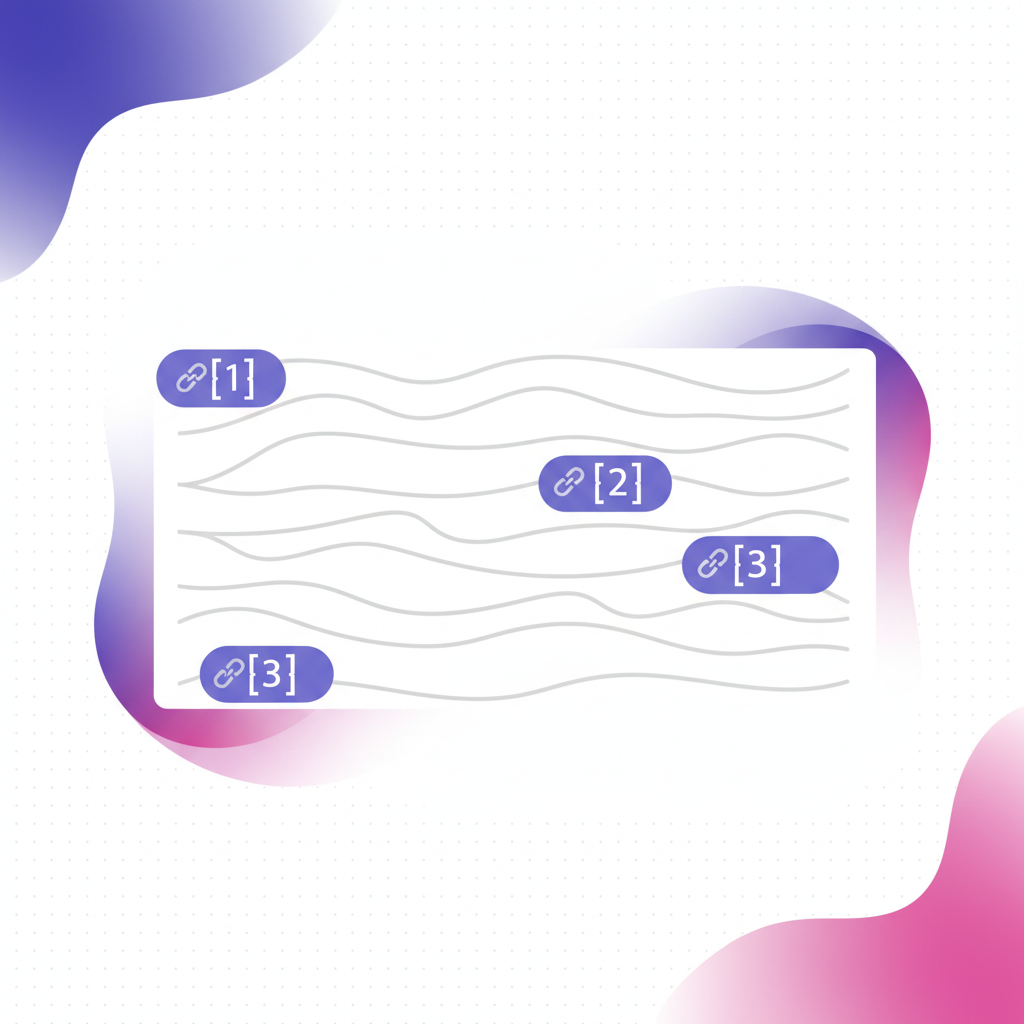
LLMs reward content that cites primary sources because it lets them attribute claims back. Content with no sourcing has nowhere to attribute, so LLMs either skip it or hallucinate the citation.
The structural rules:
- Inline links to primary sources for every statistic, claim, or quote
- Author names + dates for studies, research papers, and reports
- Direct quotes with attribution to the source publication
- Specific numbers — “$1.2 billion market by 2030” is citable; “a growing market” isn’t
The mistake most “AI content” makes: generic claims with no source. “Many studies show that X” is the canonical bad pattern — no LLM will cite it because there’s no source to attribute to. “A 2023 Stanford study (Aggarwal et al., ‘GEO: Generative Engine Optimization’) found that…” is citable.
When in doubt, link out. Outbound citation density is positively correlated with LLM ranking. The instinct to “keep all the link juice on the page” is outdated SEO folklore that actively hurts LLM citation.
Signal 5: Training-data prominence (the long game)
The signal you can’t shortcut: how much of the LLM’s training data references your content. This is why established publications (NYT, Wikipedia, Stack Overflow, popular subreddits) dominate LLM citations — they have decades of training-data prominence.
For a new brand, the realistic 12-month plays:
- Get a Wikipedia mention — even a passing reference in a relevant article matters
- Active subreddit presence — Reddit threads from
r/SEO,r/marketing,r/SaaSare heavily weighted in modern LLM training - Established publication mentions — get a one-line mention in a 2026 industry roundup
- Stack Overflow / Github for technical products — answers and READMEs end up in training data
- Quora answers — still indexed and used in some training datasets
This isn’t theoretical — the widely-shared finding that Reddit is powering nearly 40% of ChatGPT’s answers underlines why a credible subreddit footprint matters more than a press release.
This is the part of LLM SEO that genuinely takes 12+ months. There’s no automation shortcut. The compounding pays off after that horizon — once you’re in the training data of multiple LLMs, your citation rate stays high for years.
How ChatGPT differs from Claude differs from Perplexity
The three major LLMs weight signals slightly differently:
- ChatGPT — weights training-data prominence heavily. Recent live-web fetches via SearchGPT lean on schema + direct answers. New brands have a steeper climb.
- Claude — weights citation-friendly sourcing and entity clarity heavily. Easier for technically-precise content to break through quickly.
- Perplexity — most reliant on live web search. Schema + direct answers + recency dominate. Easiest LLM to “rank” on for new content.
- Google AI Overview — closest to traditional SEO. JSON-LD schema is near-mandatory. Quality + authority signals (E-E-A-T) carry over.
Practical implication: if you’re a new brand, focus on Perplexity and Google AI Overview first. Their feedback loops are fastest. ChatGPT and Claude citation follows naturally once your content gets training-data prominence.
How to track AI citations
You can’t optimize what you don’t measure. Three tracking options in 2026:
- Profound — enterprise-grade AI visibility analytics, tracks citations across ChatGPT, Claude, Perplexity. Quote-based pricing.
- Otterly.ai — mid-market, $29+/mo. Brand mention + link tracking with competitor alerts.
- Ranket built-in — basic citation tracking included with the Pro plan. Reports citation pickup alongside Google ranking.
The DIY approach: spend 10 minutes per week asking ChatGPT, Claude, and Perplexity the top 5 questions in your category, and note whether your brand appears. Crude but informative for the first 90 days.
We cover the tooling landscape in detail in our best LLM SEO tools guide, and the broader category in GEO tools.
The 30-day LLM SEO playbook
If you have one month and want to be cited by ChatGPT in 2026, here’s the order of operations:
Week 1 — Foundation
- Audit your homepage and top 10 articles for the disambiguating descriptor pattern
- Add JSON-LD schema (Article + FAQPage minimum) to every article
- Identify your top 20 candidate target queries via Search Console
Week 2 — Structure
- Rewrite the intro to each top-20 article to lead with the disambiguating brand descriptor
- Add 40–60 word direct-answer paragraphs under every H2
- Audit citations — add inline links to primary sources for every stat/claim
Week 3 — Distribution
- Submit sitemap to Google Search Console (if not already)
- Verify all schema validates via Google’s Rich Results Test
- Start a measurement baseline — note which queries you appear on in ChatGPT/Claude/Perplexity today
Week 4 — Authority
- Pitch one Wikipedia edit referencing your brand (only if you’re genuinely notable)
- Post in 3 relevant subreddits with deep, helpful answers (not promotional)
- Submit 3 guest-post pitches to established publications in your niche
By day 30, your top articles should be appearing in Perplexity for at least one target query. ChatGPT and Claude citation typically follows in weeks 8–12.
How to win in Perplexity specifically
Perplexity is the easiest LLM to break into for new brands because it leans heavily on live web search rather than training data. Three Perplexity-specific tactics that work in 2026:
- Recency signals — Perplexity weights publication date more aggressively than ChatGPT. An article republished or updated in the last 30 days has a meaningful citation advantage over a 6-month-old article on the same topic.
- Inline statistics with primary source links — Perplexity is unusually keen on numerical claims it can attribute. If your article contains a specific statistic (“76% of B2B buyers research in ChatGPT before clicking through”) with the primary source linked inline, Perplexity often picks both your article and the source as parallel citations.
- Header-question matching — Perplexity matches user queries to H2 headers more literally than ChatGPT. If a user searches “what is X”, an article with the H2 “What is X” outranks one with “Understanding X” — even if the second is otherwise stronger.
Perplexity feedback loops run weekly. Publish an AEO-optimized article on a Monday and check Perplexity for relevant queries by Friday. ChatGPT and Claude take 4–8 weeks for the same citation lift, so Perplexity is also the best real-time test signal for whether your structural changes are working.
For live practitioner discussion of what’s working in Perplexity, the r/SEO thread Any SEO practices for ranking on Perplexity Search? is the most active reference point.
What to do with content you already published
The 80/20 of LLM SEO is rewriting your existing top 10 articles, not publishing new ones. The structural changes are cheap (find/replace at the section level), and the impact compounds — every rewrite improves both Google ranking and LLM citation.
The surgical-rewrite checklist per article:
- Add the disambiguating descriptor on first brand mention
- Add a 40–60 word direct-answer paragraph under each H2
- Add JSON-LD schema if missing
- Audit citations — add inline links for every unsourced statistic
- Add 3–5 internal links to related articles
A single article rewrite is a 30-minute job manually, or 60 seconds with an optimization agent like the one inside Ranket.
Common LLM SEO mistakes
Patterns we see in audits:
- Keyword stuffing the LLM way — repeating “ChatGPT, Claude, Perplexity” 50 times in an article doesn’t help. Structural signals do.
- Schema spam — adding FAQPage schema for questions not actually in the article. Google penalizes this and LLMs ignore it.
- No disambiguating descriptor — your brand name without immediate context fails entity clarity
- Long paragraphs with buried answers — LLMs scan; they don’t read. Lead each section with a direct answer.
- Blocking GPTBot in robots.txt — blocks training-data inclusion. Counterproductive unless you have a legal/competitive reason.
- Ignoring measurement — without baseline + tracking, you can’t tell what’s working
The fix for each is the same: structural rewrite + schema + measurement loop.
How to rank on ChatGPT FAQ
Can you actually optimize content for ChatGPT?
Yes. The structural signals are: JSON-LD schema, entity clarity, direct-answer paragraphs, citation-friendly sourcing, and training-data prominence. None of these are mysterious — they’re SEO fundamentals that suddenly matter more in the LLM-citation era.
How long until LLMs start citing my content?
LLMs refresh their indices every few weeks to months. Articles with strong schema, entity clarity, and direct answers typically start appearing as citations within 4–8 weeks of publication. Perplexity moves fastest (live web search); ChatGPT and Claude are slower because they lean more on training-data prominence.
Does Google AI Overview use the same signals as ChatGPT?
Mostly yes. JSON-LD schema, direct answers, and citation density work for both. Google AI Overview leans more heavily on traditional E-E-A-T signals (experience, expertise, authoritativeness, trust) since it bridges traditional SEO and LLM ranking.
What’s the difference between LLM SEO, GEO, and AEO?
They overlap heavily. GEO (Generative Engine Optimization) is the academic term from a 2023 research paper. AEO (Answer Engine Optimization) is the marketing term for optimizing for Google AI Overview and Perplexity. LLM SEO is the day-to-day practical work. For practical purposes they mean the same thing.
Is JSON-LD schema enough for LLM ranking?
It’s necessary but not sufficient. Schema is the foundation — without it, LLMs have to infer your content’s meaning from prose. With it, they read it directly. But you also need entity clarity, direct answers, and citation-friendly sourcing to actually win the citation.
How do I check if ChatGPT is citing my brand?
Three options: (1) Ask ChatGPT/Claude/Perplexity directly — “what are the best [your category] tools” — and check if you appear. (2) Use a tracking tool like Profound, Otterly.ai, or Ranket’s built-in citation tracker. (3) Watch your GSC AI Overview impressions report (now in beta in Search Console).
Should I block GPTBot in robots.txt?
Usually no. Blocking GPTBot prevents your content from being included in OpenAI’s training data, which permanently reduces your training-data prominence — the signal that drives long-term ChatGPT citation. Only block if you have a legal or competitive reason that outweighs SEO value.
Will LLM SEO replace traditional Google SEO?
No, they’ll coexist. Even at the most optimistic projections, 40–50% of searches still flow through traditional Google ranking. LLM SEO captures the share that shifts to AI-answer interfaces. Smart 2026 teams optimize for both — the signals overlap, so most of the work serves both.